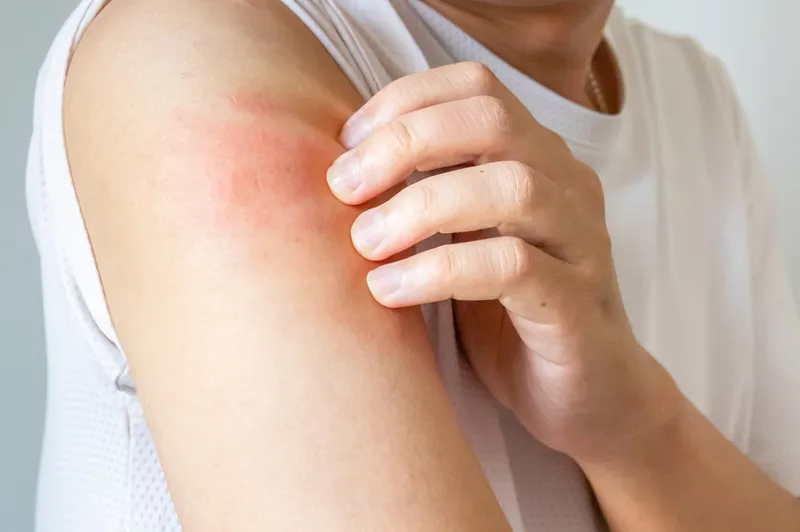
If you struggle with eczema or rosacea, you’ve probably tried:
- Different creams
- Steroid prescriptions
- “Sensitive skin” products
- Cutting random foods
And maybe you’ve thought, “Why does this keep coming back?”
From a functional health perspective, we ask a simple question: What is driving the inflammation?
Because eczema and rosacea are not just skin problems. They are inflammatory conditions.
And inflammation almost always has a deeper story.
The Gut–Skin Connection
A large portion of your immune system lives in your gut. When the gut is irritated, imbalanced, or inflamed, the immune system can become more reactive.
For some people, that reactivity shows up in the skin.
Research over the last decade has clearly described what’s called the gut–skin axis: the connection between the microbiome, immune function, and inflammatory skin conditions.
That doesn’t mean every rash is a gut issue.
But it does mean your skin may be reflecting what’s happening internally.
It Can Start Early

Believe it or not, your gut health story often begins at birth.
Studies show that babies born vaginally and breastfed tend to develop more diverse gut bacteria early in life. C-section delivery and formula feeding can create different microbial patterns.
This is not about blame. Many of those interventions are necessary.
But early microbiome development influences immune balance, and eczema is considered an immune-driven condition.
Antibiotics Matter More Than We Realize
Now fast forward to childhood and teenage years.
Think about:
- Recurrent ear infections
- Strep throat
- Sinus infections
- Long-term antibiotics for acne
Antibiotics can be lifesaving. But they also reduce beneficial gut bacteria.
Research shows repeated antibiotic exposure, especially early in life, is associated with increased risk of atopic conditions like eczema.
When microbial diversity drops, the immune system can become more inflammatory. And in some people, that inflammation shows up on the skin.
Rosacea Has Internal Links, Too
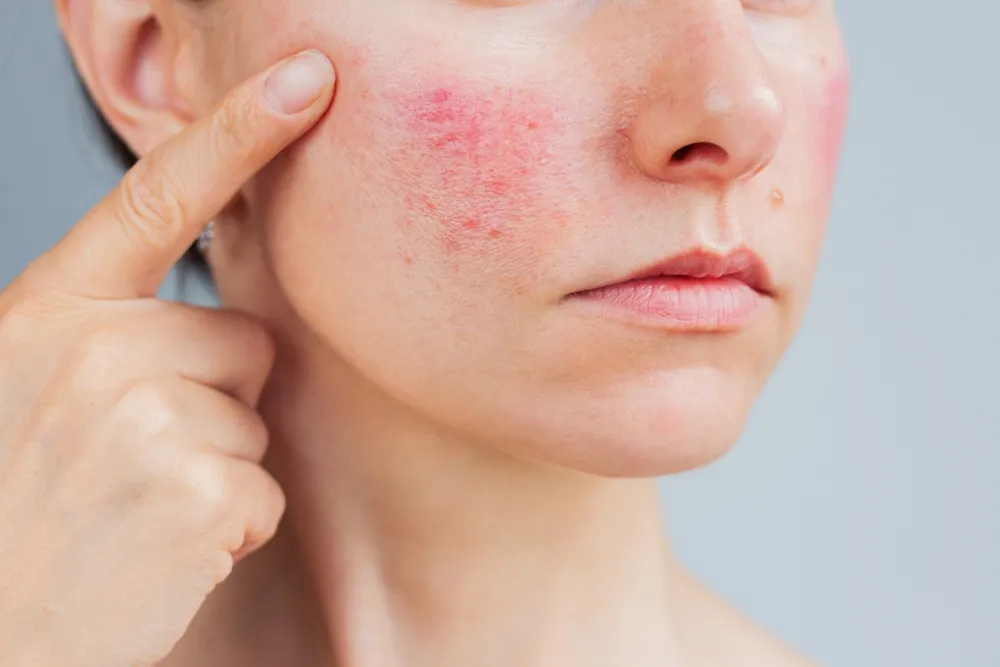
With rosacea, research has identified associations with:
- Small intestinal bacterial overgrowth (SIBO)
- H. pylori infections
- Increased gut permeability
Again, not everyone has these issues.
But rosacea is more than surface redness. It often reflects internal inflammatory patterns.
Don’t Ignore What’s Going ON the Skin
Functional health looks at both internal and external factors.
Many commercial lotions and creams contain:
- Artificial fragrance
- Synthetic dyes
- Harsh preservatives
- Alcohol
Fragrance is one of the most common skin irritants identified in dermatology research.
If your skin barrier is already inflamed, heavily scented products can make things worse (even if they’re labeled “natural”).
When the skin barrier is compromised, it becomes more reactive and loses moisture more easily. This can increase redness, itching, and flare-ups.
Choosing fragrance-free, simple formulations can make a significant difference.
Why It’s Not as Simple as “Just Take a Probiotic”

We hear this all the time: “I started a probiotic for a few weeks, but nothing changed.”
Rebuilding the microbiome takes time. True foundational support may include:
- Cleaning up inflammatory foods
- Increasing fiber diversity
- Supporting digestion
- Optimizing vitamin D levels
- Managing stress
- Supporting the skin barrier externally
When we address the foundation, we often see skin improve.
Not overnight.
Not magically.
But steadily.
The Big Picture
When someone walks into Apothecary & Co. with eczema or rosacea, we don’t just look at the rash.
We look at:
- Medical history
- Antibiotic exposure
- Digestive patterns
- Stress levels
- Nutrition
- Environmental triggers
Because your body is not random.
Your skin is responding to something.
And when we calm the internal inflammation and support the terrain, the skin often follows.